Contact Us

Use the form on the right to contact us.

Form Block
This form needs a storage option. Double-click here to edit this form, and tell us where to save form submissions in the Storage tab. Learn more

3720 Walnut St
Boulder, CO, 80301
United States

303-449-4141

Rocky Mountain Rescue Group, Inc. (RMRG) is an all-volunteer organization trained and equipped for search and rescue on mountainous terrain in all weather conditions. Founded in 1947, we are Boulder County's primary mountain rescue agency, but upon request also assist other mountain rescue teams outside the county. We also provide outdoor recreation safety education and disaster response services. RMRG is a non-profit IRS 501(c)3 organization and we do not charge for our services.

RMRG-Steep-Field-Woods-Rescue.jpg

What's New

Our latest missions, lessons learned, safety education, fundraising and provide a searchable record of selected past missions from which we hope you learn what you need to never need our assistance in the field. 


Remembering Dean Bowyer

Nora O'Malley

Dean Bowyer served as RMRG Group Leader (GL- operations director), Assistant Group Leader (AG - training director)  and Business Manager (administrative leader) throughout the 1970s. 
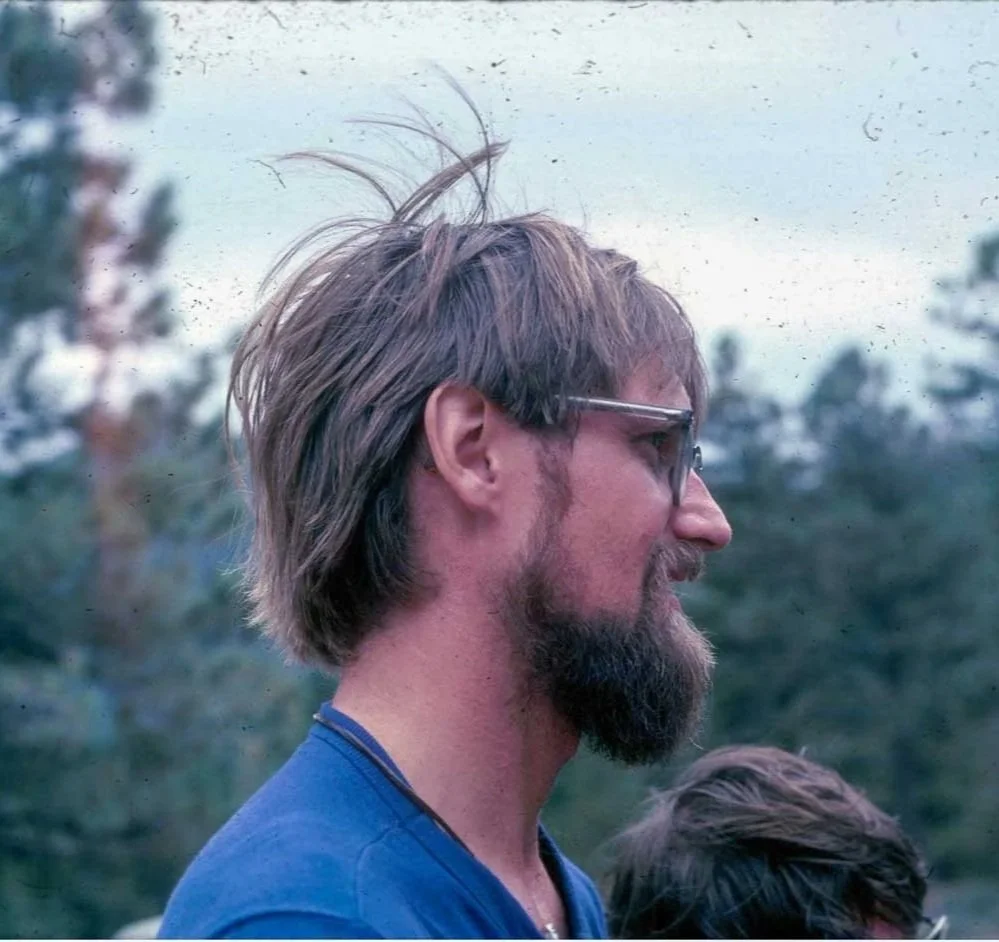
Dean Bowyer portrait by Al Post, November 1978

After that, Dean chose to focus his RMRG work on training. In addition to being an extremely capable mountain rescuer, Dean was a consummate outdoorsman--hiker, mountain climber, scuba diver, and aircraft pilot. 
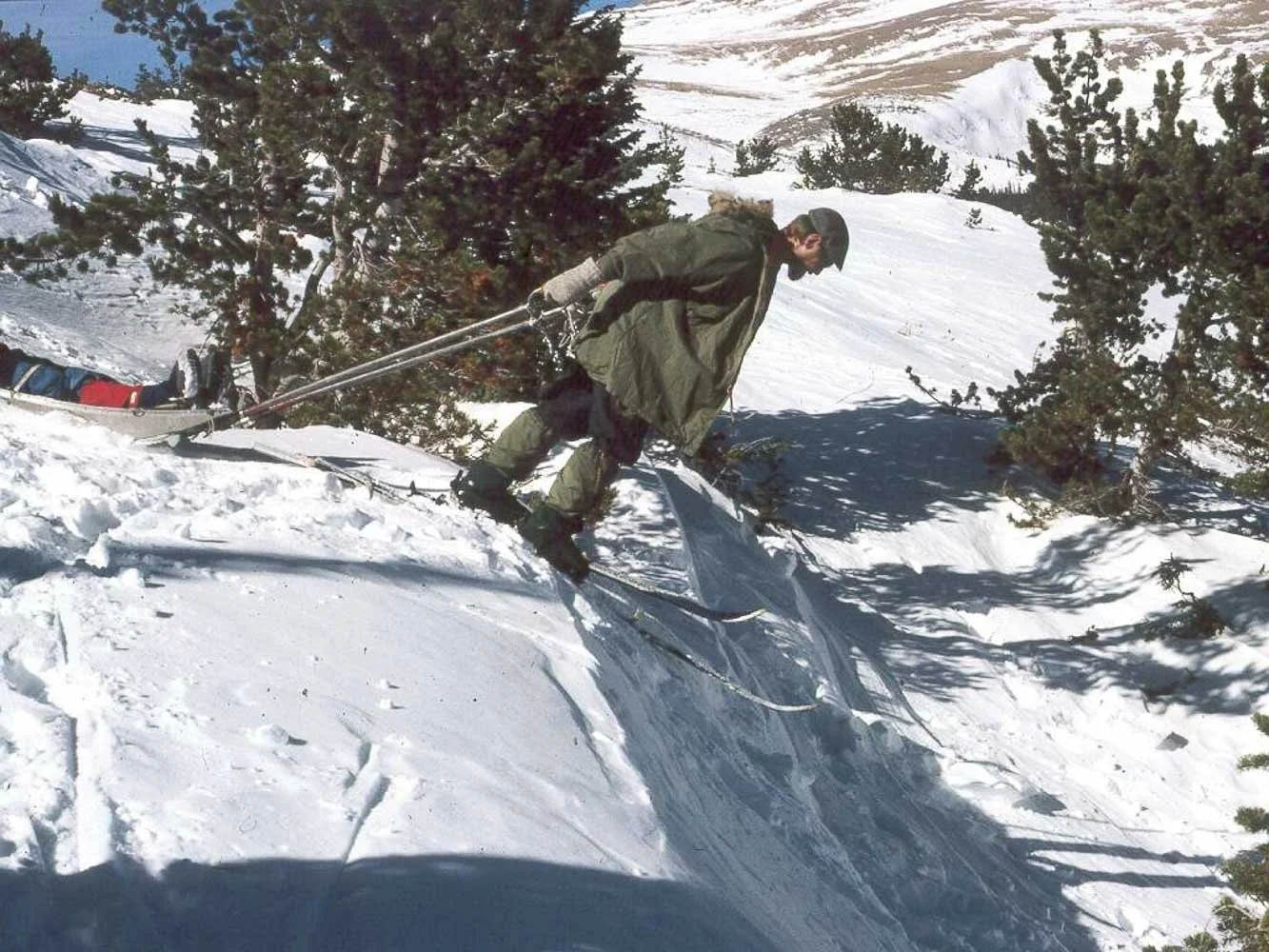
Dean clowning around with the Akija sled litter

Dean's death in a glider crash on November 2, 1996 was a major blow to RMRG. His Quaker style service was deeply moving, although rescue stories were only briefly mentioned. RMRG began the Dean Bowyer Award few years after Dean's death. The Dean Bowyer Award is given to a current or retired member that has shown a performance level above and beyond that expected of their position in the group.
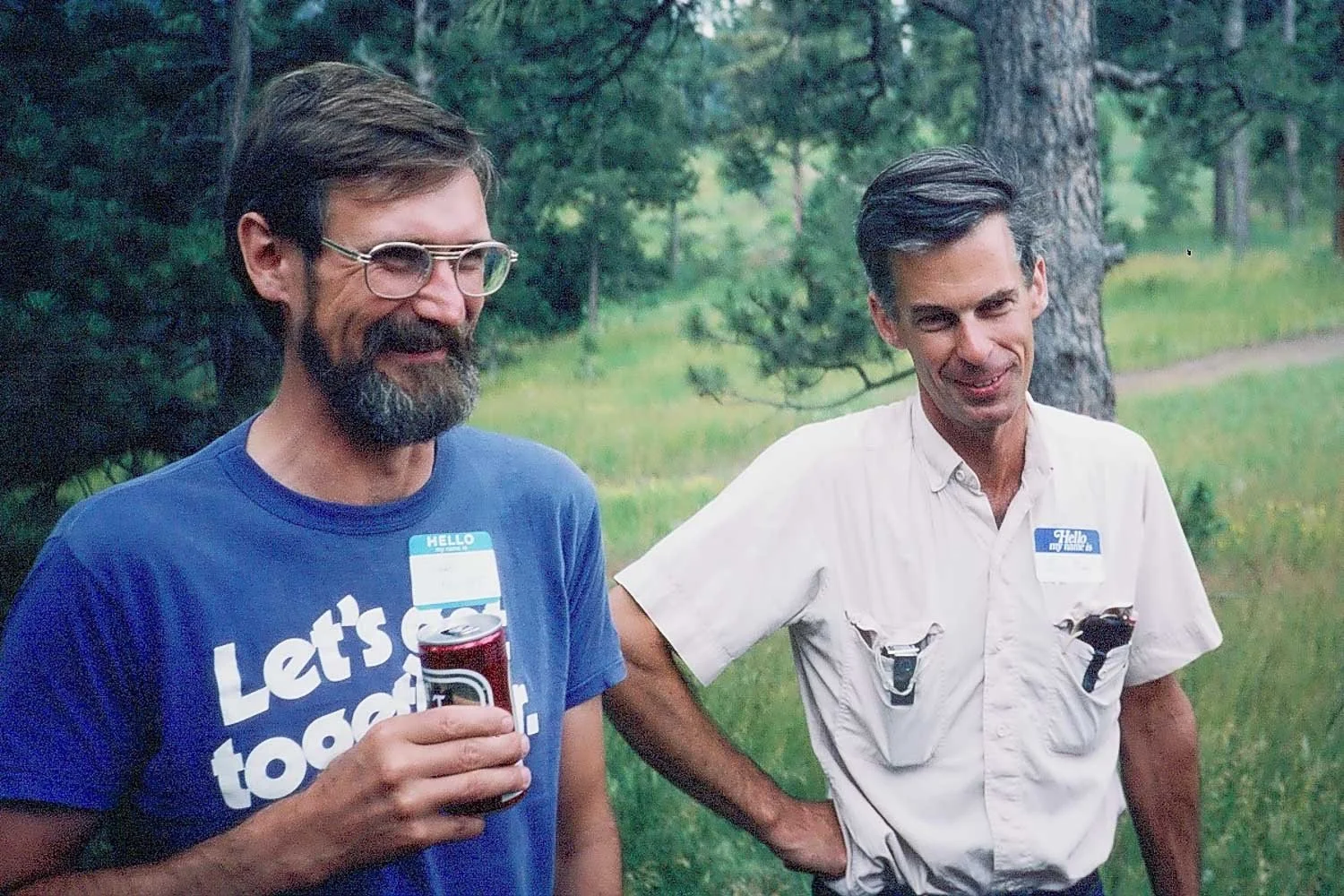
Dean Bowyer and Bill May, RMRG 40th anniversary celebration

Memories of Dean

“Shirt Tail Peak Reconnaissance” with Dean

July 9, 1989 began warm, but everyone knew it would be blazing hot before noon. The Rocky Mountain Rescue (RMR) training schedule called for an exploration of Shirt Tail Peak, northwest out of Eldorado Canyon. Temperatures in Eldorado Canyon were expected to reach close to 100. Dean corralled the group of RMR volunteers at the “Cage,” with the challenge “What shall we do today for training? We’re not going to go melt on Shirt Tail Peak.“ 

The group settled on driving up to the Long Lake Trailhead west of Brainard Lake. We brought ice axes for steep snow climbing and glissading, but the hike was slow, and Dean, waiting patiently for us to catch up, noted we wouldn’t get much time on snow at our collective pace. Hiking with rising temperatures, we reached the Isabelle Glacier mid-day. We found soft, sloppy wet snow. We did a bit of self-arrest practice and glissading, but soon it was time to hike back to the trailhead. Dean led the way down the switchbacks below the glacier. Arriving at a small, partially ice-bound pond, we found Dean’s clothes in a pile along the shore. Mid-80s with bright sun at our 11,000’ elevation. “Is he going to skinny-dip in that freezing water?” I wondered.

Naked Dean started gingerly picking his way along a grounded iceberg extending into the pond, taunting the rest of us to try the water. About 15’ out, he yelled and jumped, then swam ashore. He climbed out with a shivering roar. “That was great, wonderfully refreshing! Who’s with me for another swim?” A few of us stripped and followed him on the iceberg, a little farther out this time. By the third time, nearly the whole group was out there, lifting our feet in turn off the freezing ice. I stood on the ice, watching Dean jump in again. If he could do it, I could do it. 

I held my breath and jumped, and the cold hit me like Mike Tyson. I swam ashore as fast as I could. Possibly the coldest I’ve ever been. I was grateful not to have had a heart attack as we air-dried in the warm sun. We watched Dean go out for yet another round. Someone might have taken pictures of the naked group. 

As we hiked out, we were startled by a massive plume of smoke rising above the foothills west of Boulder. This turned out to be the Black Tiger Fire - then the most destructive fire in Colorado history. Thankfully no one died, but none of us expected the scale of destruction from the fire. 

Dean was my favorite mentor in RMR. His patience with those of us with limited experience was supportive and helpful, if sometimes irreverent. He lived up to the “Dean Niner” (Caterpillar bulldozer) nickname, often shoving large logs out of the way of the litter evacuation route, and leading rescuers forward despite fatigue and potential loss of morale. I still miss his cheerful confidence. 

Dave Christenson
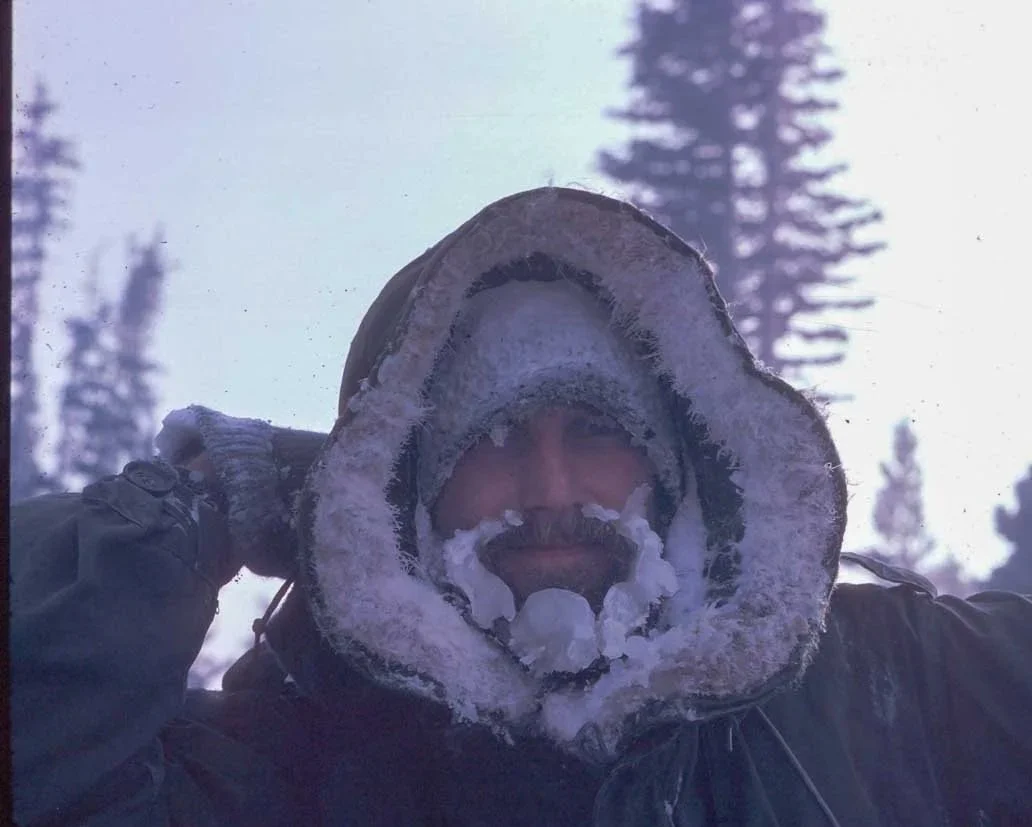
Dean Bowyer iced parka, January 1979, photo by Al Post. “After this trip, we stopped in a restaurant on I-70 for dinner, with several of us still frozen in our parkas. Customers were laughing as chunks of ice fell off and hit the floor.”

Dean Bowyer stories from charlie potter

I knew Dean well.  When Dave Hibl called me with news at Dean’s death, I was too shocked for words.  Yet in some ways, I wasn’t totally surprised.  Dean pushed the limits.  That is what made him so good. I first met Dean when he was the RA for the dorm I lived in as a sophomore.  It was the fall of 1970. I spent a lot of time with him in many ways.  We were both pretty new to RMRG in 70 but we both stayed very active. Dean and I were in the CU Hiking Club and did several trips together in the desert and in the mountains. Later, I was Assistant Group Leader (AGL) multiple times.  Once with Dean as Group Leader (GL).  Chuck Demarest, Dean and I did 3 expeditions together. We attended a couple of national mountain rescue conferences and shared too many missions to count.   

The 1st expedition was to Chimborazo in 78. I was asked to write on Deans cerebral  edema attack there. We drove to the “trail head” at something over 14000 feet.  The “trail head” was the point when the van couldn’t go any higher. There was no trail. Dean did pretty up well to the Whymper hut at 16400.  But he slowed down a lot the next day, arriving at high camp well after everyone else.  He was my tent mate there, at 19,300 just below the cap glacier. He got there but was unable to help dig the tent platform. The next morning, he complained of a terrible headache. My experience rescuing a Japanese woman on Denali made me a little concerned, but he seemed to be breathing normally. I listened to his chest and detected some breath gurgling but minor enough to be just congestion. Then he got out of the tent to relieve himself. When he came back in, he immediately passed out.  I couldn’t wake him and sounded the alarm.  Everyone converged within minutes. The response of the team was awesome. We stuffed him in my bivy bag wearing my freedom harness and started sliding him down on the snow using two ropes as a belay.  We were descending in probably less than 20 minutes from when he passed out. But his pupils were already fixed and dilated. My memory was the group totaled 8.  Three stayed at camp and 4 of us evacuated Dean but I may be off by one.  

We ran out of snow at around 17000.  We first attempted to create a makeshift litter out of the two ropes but it was going slowly so we opted to just carry him. Luckily, a short bit later, he started to come around a little. We draped him over two shoulders and he stumbled lower. We had to trade off frequently. It was exhausting because Dean was so much taller than any of us.. We stopped for a rest at the hut.  But Dean started to deteriorate, so the rest was short lived and we continued down again.  Dean was doing a little better but not great.  We opted not to go over the pass again to Quito but instead take the most direct downhill route.  That took us to the town of Ambato.  

We took Dean directly to the ER.  It was not super comforting as we weren’t sure the ER doc understood what Dean was suffering from. But he got taken in. And shortly thereafter, we were asked to leave.  

Those who came down had left most of our gear at high camp. And we had 3 people still on the mountain. We decided to make a straight push for it.  We drove back up to the “trail head” early the next morning and started off. The climb was long.  We didn’t get back to our camp until the middle of the night, maybe 18-20 hours after we started.  But the others weren’t there.  They had gotten concerned about their own health and started down.  Unfortunately, they had camped maybe a quarter mile off the climbing route a couple of thousand feet below high camp. It’s a volcano and level spots are sparse. We passed them unaware in the dark. We did regroup a day later and 5 of us ultimately made a successful bid. 

We picked up Dean a week or so later and stayed in Ambato for a bit.  We abandoned our plan to try Cotopaxi and the others all flew back to the states. I traveled by myself into the Amazon basin for a week and a half before coming home. .

After this experience, Dean realized that the headaches he got whenever he climbed 13ers and 14ers were a bigger concern than he had thought.  In typical Dean fashion, he did not accept that as a limit.  He read everything he could find and eventually volunteered to be guinea pig for the high-altitude research lab. He joked that they loved him and he should start charging a lot for his service.  He was indeed the best test subject they’d had. Other subjects were too variable from test to test. He’d react consistently, allowing them to perform far fewer tests to get good data.  

Ultimately, he did benefit to some extent.  He learned things he could do to train and perform better on the mountain. He got drugs that helped. That helped him go to the Tian Shen and Elbrus in 1988 and the Pamirs and Mustagatuh in 94.  Though he did have some problems and had to turn around a couple of times on both trips, he did successfully climb a few high peaks. 

I could write dozens of stories about Dean if I had the time.  
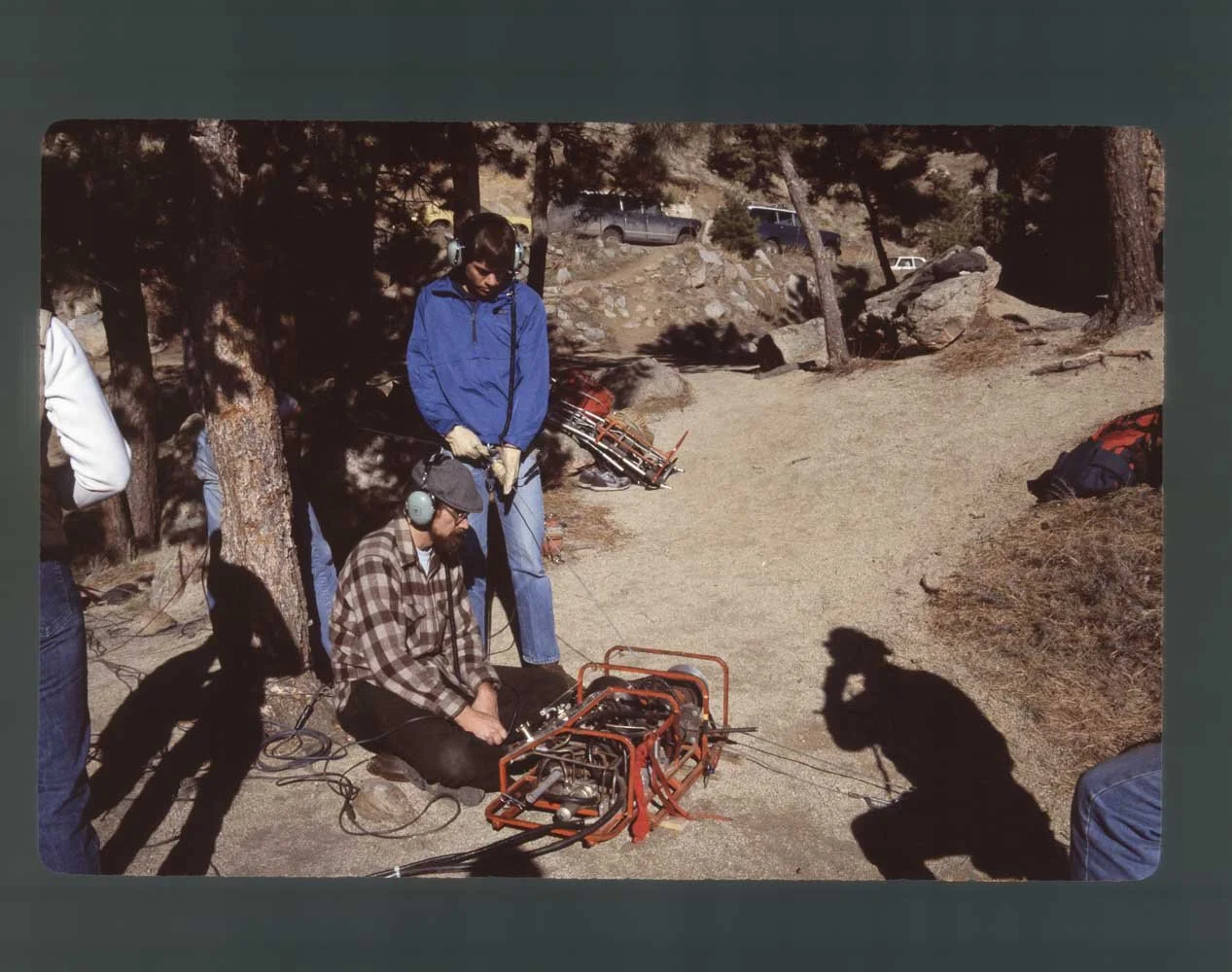
Dean Bowyer operating a gasoline powered cable winch.

excerpt from chuck demarest’s forthcoming memoir

A group of RMRG members responded to Crestone Peak for a rescue of a patient with a compound leg fracture high on peak. We had evacuated the patient down from almost 14,000 feet to Cottonwood Lake at 12,310 where there was a great Landing Zone (LZ) and a pleasant meadow. We called for the “arranged” helicopter, but then the chopper couldn’t come, so 6 miles evacuation to Baca Grade Ranch.

Our relief was short-lived. Within a hundred feet or so of entering the trees from the lovely restful tundra, the trail disappeared. How could this be? A voice rang out, “CHUCK! Where’s the friggin trail?” I had the map, so it was my problem. I answered, “It’s got to be here somewhere. It’s on the map. It follows the creek on the right side.” We searched to the right and to the left attempting to find any trace of a trail, but there was none. Now a “pack trail” is always more substantial than any old trail on a map, but the 20-year-old map was either wrong or more likely the trail had had no maintenance for decades and had become hopelessly buried in downed timber and vegetation. There was no alternative but to bash our way through the downed trees, underbrush, and bogs, belaying the litter down steep slabs, and then down along the valley bottom to our destination. Along the way I and others often roamed up the hillsides left and right desperately looking for that pack trail that we must have missed. There was nothing. Darkness was coming, making it harder to find the best direction through this mess. In this ugly, dreadful effort Dean Bowyer earned the title “DEAN 9,” a take on the heavy-duty Caterpillar bull dozer  “D9”. He was a strong guy as he went ahead of the litter bashing down dead timber and tossing various branches, trees and other obstacles to the side, making a better path for the 6 members carrying the litter with our patient. Dean was one of those “larger than life” sorts and could play in any venue.
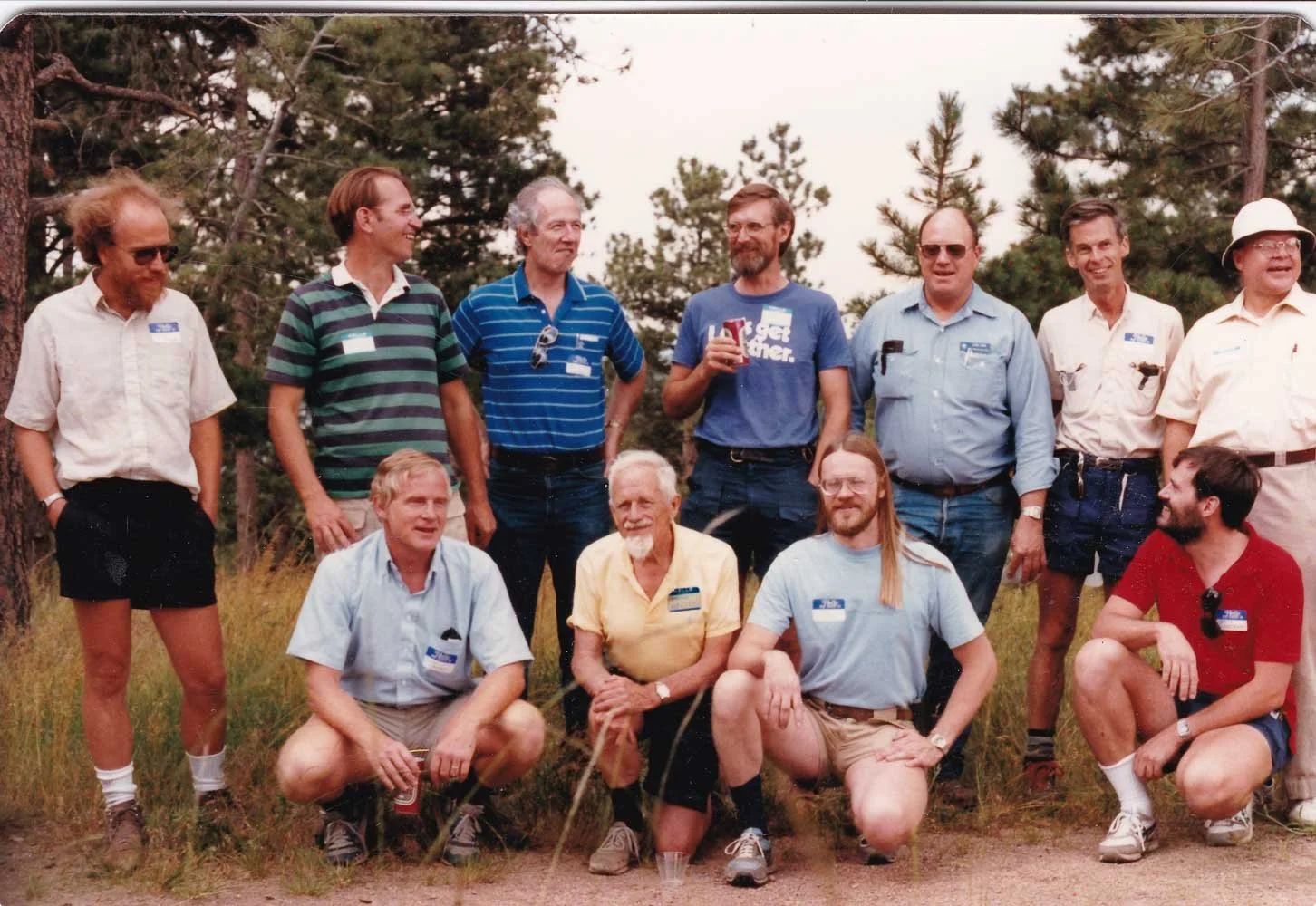
1987 40th anniversary, Flagstaff Summit, Group leaders picture

Back row: Guy Burgess GL 1974, Joe Stepanek GL 1970, Jeff Wagner (not GL); Dean Bowyer GL 1973, 77, 78; Lewis Dahm 1976, 1980, 1981; Bill May GL 1971-72; Dave Lewis GL 1957-58, 1961-62; Front row kneeling: Chuck Demarest GL 1968-69; Harrold Walton GL 1952; Ray Sundby GL 1985 - 88; Bruce Bartram GL 1982-84


75th Anniversary Public Presentation

Dave Christenson

2 hour video, recorded at the Longmont Museum, September 23, 2022. Description of RMRG in 2022, RMRG's first vehicle in the 1940s, radio communication in past decades, Kevin Dye search near Casper, WY, 1971; cable winch evacuation systems, Mt. Yale winter plane crash search and rescue (1981) and looking to the future.

As schedule allows, we’ll publish excerpts as shorter length clips

Labor Day weekend first aid practice

Dave Christenson

Patient loading into litter video (10 sec):

Start of patient loading video from the opposite direction


Practicing with the bag valve mask on an airway mannequin

“Scree evacuation” (belayed low angle litter lowering) to end the training.

75th Anniversary Open House

Dave Christenson

All are welcome.. Make time in your Sunday to see demonstrations of rope skills at our tower and demonstrations of a vertical (cliff) litter rescue. There will be several activities just for kids like trying out being “rescued” in one of our litters. Take a tour of our facilities, view one of our rescue trucks with 1200 lbs. of rescue gear. You can also see the 3200’ of rope that is in each of our trucks. View a slide show of RMRG rescues and practices spanning 75 years.

Let us know on Facebook if you are interested of will be coming.

75th Anniversary Public Events

Dave Christenson

September to November: Photo Exhibit

Boulder Public Library - 1001 Arapahoe Ave. Boulder CO Arapahoe Ramp Gallery
Rocky Mountain Rescue Group - 75 years of Search and Rescue Leadership
Photos of RMRG missions and practices from the 1950’s to today. Printable flier (PDF)

September 23 - Friday: Library Presentation

Boulder Public Library - 1001 Arapahoe Ave. Boulder Creek room, Boulder CO, 12:30-1:30 pm: Rocky Mountain Rescue Group - 75 Years and Still Going Strong
by Dr. Alison Sheets, RMRG’s current medical director, past Group Leader, and current Mountain Rescue Association President. In person only calendar events: Google event, Facebook Event

September 23 - Friday Longmont Museum Presentation:

Longmont Museum - 400 Quail Rd. Longmont CO, Steward Auditorium 7:30-9:00 pm
A Retrospective of Rocky Mountain Rescue Group’s Service to Boulder County and Beyond. RMRG speakers and video interview clips, and slide show. Printable flier (PDF)
Facebook Livestream https://fb.me/e/1HvylNVIl In person calendar events: Google event, Facebook Event

September 25 - Sunday Public Open House

The Cage (RMRG Headquarters) - 3720 Walnut St. Boulder CO; 10:00 am-1:00 pm.
RMRG member demonstrations, For families and all ages. In person only calendar events: Google event, Facebook Event ; Printable flier (PDF)

Injured climber evacuation, Eldorado Canyon State Park

Dave Christenson

Other climbers reported the injured party was climbing the “Purple Haze” route on the West Ridge. (MountainProject link). The climber was leading the route, fell and a couple of pieces of protection failed, including a “fixed” piton. Seasonal warning to climbers: Winter freeze - thaw cycles loosen rock that was solid last fall. Use extra caution for the next few months.

Dome vertical (cliff) rescue practice, then & now

Dave Christenson

Training March 20, 2022 & 50 years earlier. Same cliff, modern gear in use today:

RMRG Alumni Association

Dave Christenson

RMRGAA Logo v1 small.png

Alumni Association Flyer (PDF)

Our Mission The RMRG Alumni Association (RMRGAA) unites RMRG’s rich history with the RMRG of today. Our mission is to enhance and renew the lifelong Rocky Mountain Rescue Group experience for all Alumni. We inspire those that have served RMRG in the past to support RMRG today. We help maintain lasting friendships and build on our shared experience.
Our Goals

  • Maintain Connections
    Maintain connections between RMRG Alumni and RMRG operational members. Maintain a worldwide RMRG family, by providing updates about RMRG today, stories of the past, and opportunities to reunite. Ensure that psychological health support continues for RMRG Alumni.

  • Support RMRG Support the team through a variety of ways from assisting with current non-field related operations, to contributing your professional skills for a variety of needs, to fundraising for important projects, to helping with annual events and anniversary celebrations like our upcoming 75th Anniversary! (2022)

  • Preserve RMRG’s History
    Help preserve RMRG’s history with written stories, interviews, keeping our RMRG history website updated, and maintaining our historic RMRG equipment and records.
    Our Membership All current and former Operational Members (Alumni) and invited Friends of RMRG.

Please contact
Alumni Association Alumni Association
April Christenson
President

To contact the RMRG Alumni Association, please fill in & submit the form below.

RMRG Equipment history: New litters!

Dave Christenson

75th Anniversary PUBLIC event details, September 23 - 25, 2022

Rocky Mountain Rescue Group has a long history, over 70 years of providing free rescue services. Perhaps our most used piece of equipment is the litter. The litter is a basket used to protect and support an injured party in an evacuation.

Stokes litter, 1955, RMRG

Stokes litter, 1955, RMRG


The first litter used in the group was the “Stokes litter” which was used from 1947-1988. That type of litter was developed by the Navy. It was originally designed by Francis Stokes, retired surgeon general of the Navy. It had a tubular steel frame with a wire mesh “shell”. RMRG modified their Stokes litters by cutting them in half for backcountry portability. We added a tubular sleeve and a turn buckle to secure the two halves of the litter into a complete litter for evacuations. This gave the rescue group the ability to put the 2 litter halves on a metal backpack frame to carry into the field. Often the group carries a litter into a mission in the mountains for many miles. The Stokes litters weighed about 40 lbs. Typically a rescuer carrying a litter into the field also has to attach and carry their own personal pack. Quite a load!

“Super litter” rigged for vertical rescue lower, test tower, 2000’s, RMRG

“Super litter” rigged for vertical rescue lower, test tower, 2000’s, RMRG

In the early 1980’s RMRG decided to design and build their own custom litter. After extensive deliberation, we came up with a design. In 1983 we purchased the materials for 10 “Super litters,” and contracted with a fabricator. Unfortunately that fabricator went out of business. It took quite some time to retrieve the materials, engage a new fabricator and make the litters. In November 1988 the first new Super litters went into service. They were constructed with a stainless steel tubing frame and stainless steel sheet sides and bottom. The Super litter provided more protection for the patient than the “Stokes” mesh basket litter. The Super litters weighed in at 45 lbs. Super litters were also carried into the field in 2 halves on a metal backpack frame. Sturdy construction kept Super litters in service for 32 years despite hard use in countless training exercises and evacuating more than 1,000 patients.

New Spartan litter in vertical evacuation configuration, Flagstaff Mountain, 2019, RMRG

New Spartan litter in vertical evacuation configuration, Flagstaff Mountain, 2019, RMRG

As of June 2020 RMRG retired the Super litter and now uses commercially manufactured Traverse Rescue “Spartan” litters. They are quite a bit lighter in weight and also separate into 2 sections for carrying into the field. The construction is titanium tubing with a plastic shell. RMRG spent several years evaluating and testing, we finally chose the “Spartan” litters.

Stokes litter, tryol (high line) evacuation rigging, 1950s, RMRG

Stokes litter, tryol (high line) evacuation rigging, 1950s, RMRG

Super litter, tyrol evacuation of an injured climber across South Boulder Creek, Eldorado Canyon State Park RMRG

Super litter, tyrol evacuation of an injured climber across South Boulder Creek, Eldorado Canyon State Park RMRG

Stokes liter, practice tryrol evacuation, 1950s, RMRG

Stokes liter, practice tryrol evacuation, 1950s, RMRG

Super litter on snowmobile sled, practice 2000’s RMRG

Super litter on snowmobile sled, practice 2000’s RMRG

New Spartan litter, tyrol rigging, RMRG

New Spartan litter, tyrol rigging, RMRG

New Spartan litter on backpack frame, RMRG

New Spartan litter on backpack frame, RMRG

“A LIFETIME OF STORIES”- Celebrating our 70th Year

Dave Christenson

Starting "scree evacuation" practice, somewhere in Boulder County, 1960s or '70s

Starting "scree evacuation" practice, somewhere in Boulder County, 1960s or '70s

Excerpt from Playing for Real: Stories from Rocky Mountain Rescue

By Mark Scott-Nash (RMRG retired)

A mountain rescue group was a revolutionary idea necessitated by an unprecedented cluster of mountaineering accidents and tragedies in the winter of 1946-1947. Volunteer mountain search and rescue groups were unheard of before this, when accidents were few and far between. Subsequent newspaper notices called for volunteers to meet and bring their ideas about search and rescue. The meeting time of the Rocky Mountain Rescue Group was set for 7:30p.m., the same time meetings have been held ever since.

A steering committee was formed that consisted of Art Everson (the sheriff), Charles Hutchinson, C.A. Hutchinson Jr. Clinton Duvall, Evertt Long, Bruce Snow, Clayton Weaver (Forest Service ranger), Stuart Mace, Art McNair, and John Pederson . . .

Spectacular missions dot RMR’s history from those earliest days . . .

Check back here for the next installment of 70th stories: The RMR mission that gave “airplane gully” on Navajo Peak west of Boulder it’s name.

Rescue of an injured rock climber, Eldorado Canyon

Dave Christenson

Vertical evacuation of injured party

Vertical evacuation of injured party

At 2:40 p.m. Friday, May 12, Boulder County Communications Center notified RMRG and partner agencies of an injured climber on the Bastille cliff formation in Eldorado Canyon State Park. Rescuers responded to the scene and deployed to the top of the cliff to prepare an evacuation. Rescuers completed a vertical evacuation down the north face of the Bastille to an ambulance on the road immediately below.

The injured party was wearing a helmet which was damaged by the accident. The individual was "leading" at the time of the accident. RMRG wishes the injured party a full and speedy recovery.

More photos:

Looking down from the brake station at the top of the Bastille. Patient in the litter, top middle.

Looking down from the brake station at the top of the Bastille. Patient in the litter, top middle.

Higher on the evacuation

Higher on the evacuation

Evacuation nearing the road below (foreground)

Evacuation nearing the road below (foreground)

Rescue of Stuck Climber on North Face of Third Flatiron

Angela Tomczik

Staged on Bluebell Road, rescuers used binoculars to direct roped teams to the stuck party on the North side of the Third Flatiron.

The stuck party (wearing white) and rescuers (wearing blue) as seen through a spotting scope at the Bluebell Shelter.

The stuck party (wearing white) and rescuers (wearing blue) as seen through a spotting scope at the Bluebell Shelter.

RMRG members coordinated the rescue of a stuck scrambler who had climbed up the north side of the Third Flatiron on the morning of Monday, September 19. After finding himself in precarious, technical terrain, the scrambler began yelling for help. A bystander heard the screams, located the stuck party and called 911. Rocky Mountain Rescue Group responded to the call, sending in roped climbing teams from both above and below the scrambler. Once secured, the uninjured scrambler was lowered to the trail and hiked out to the trail-head. RMRG never charges for rescue services, and there were no fees/charges associated with this rescue.

RMRG rescues many stuck scramblers in the Flatirons and would like to take this opportunity to remind people that the Flatirons are composed of many technical routes. Scrambling, with or without ropes, can be very dangerous.  It is easy to unintentionally end up in difficult terrain. Always be aware of dangerous terrain (lichen, pine needles, moss, loose rock, water) on less traveled routes. When planning a climb make sure to research route descriptions, including instructions on how to return back down to the trail. Remember that climbing up is often easier than down-climbing.

Only attempt to climb a features which you have researched and have the proper gear/expertise to safely complete.